
Memory Box
A ghost story from the archives

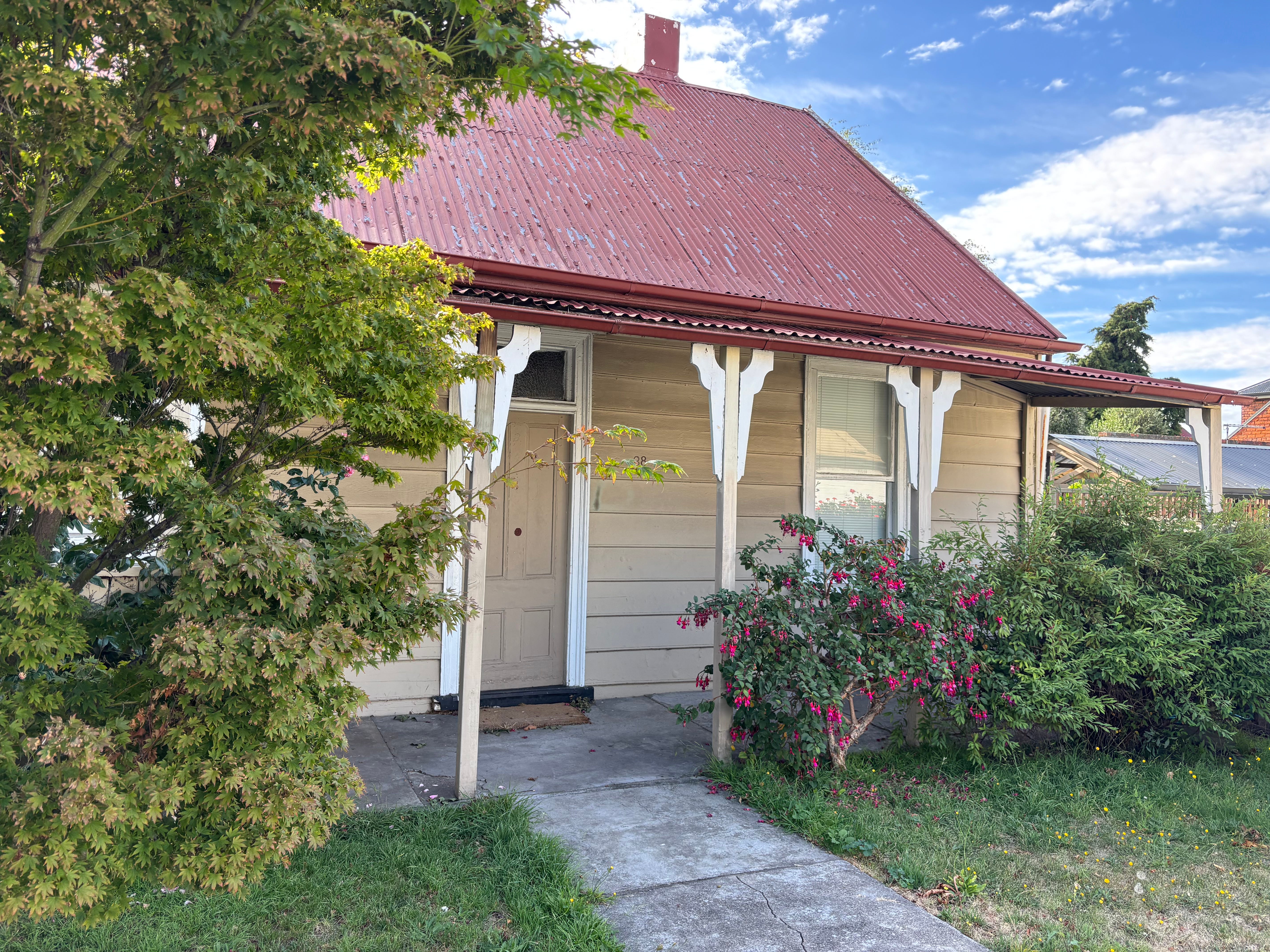
I bumped into an old friend the other day.
During a glorious long weekend in Hobart last weekend, my love and I took a walk around Arthur Circus, a famous circular street in the historic waterside precinct of Battery Point. In the chill of an afternoon gilded by autumn’s first leaves, I remembered that one of my all-time favourite stories from my books is partly set in a home in Arthur Circus, and we set out to look for it.
Kissed by rose bushes, the cottages looked camera-ready – dove-grey and white, with gleaming plaques flashing tales of colourful pasts, they exude an air of cultivated prestige. All but one. This one was weatherboard, in need of a little TLC and stood apart for its patch of unkempt lawn yawning from door to front gate.
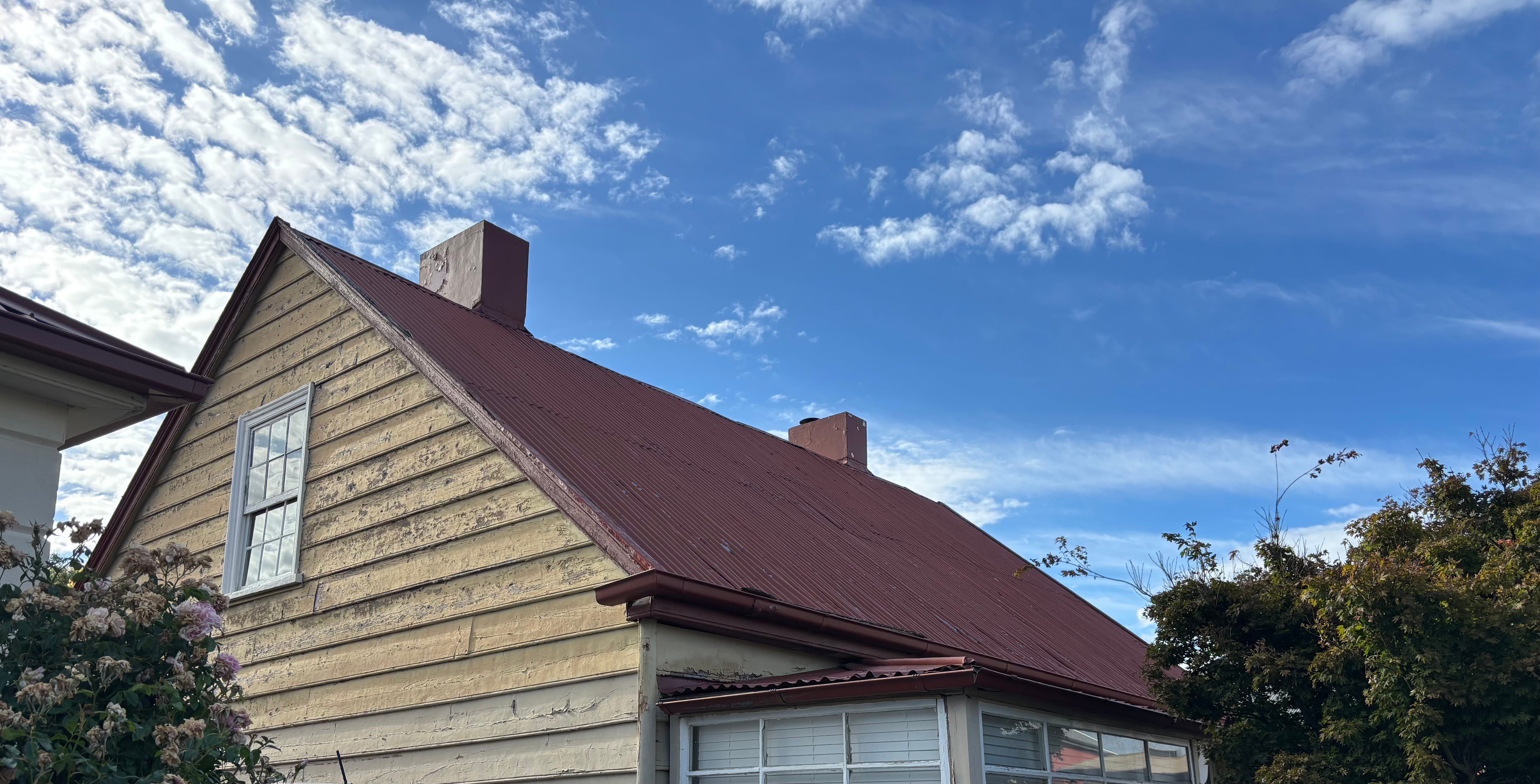
I knew the home in my story was weatherboard and had the biggest front lawn of all the homes on Arthur Circus. We’d found her. The house seemed uninhabited but we couldn’t be sure. An eerie sense of … what (?) summoned goosebumps from our skin, as we gazed up at the top-floor side window.
Houses are storytellers, but it’s the people who live in them who weave the tales. In all of three of my books, I’ve written about haunted people, and the houses that host them. The story that follows is one of them – it’s called Memory Box, and is from my 2009 book Spirit Sisters. This is one of those yarns I’ve never been able to forget, no matter the passage of time. Read it to understand why (you might want to pour some tea, settle in…)
I once tried to track down the gently spoken Patricia, my subject, but with no success. Perhaps I’ll try again, now that I can tell her I stood outside her old house by the sea, peering through cloudy panes into her past.
MEMORY BOX
The man slithered on his elbows along the floor.
He was dead, of course, but there was something else askew
about him.
Lying stomach down on the wooden floorboards, he propped
himself up on sinewy forearms and shuffled forward, dragging
his flaccid bottom half. Closer he crept to Patricia Turnbull, who
studied him without fear, but with some pity. He lifted his face to
look at her, his mouth a mute slash, his black eyes howling. ‘He
was crawling towards me like he was paralysed from the waist
down,’ says Patricia. ‘I decided to go to him and tell him it was
okay to leave. I thought I’d try that. I went to the corner where this
man was laying, in this house that had been handed down through
generations, and said, “It’s okay for you to go . . .” ’
Patricia has a story to tell. It is a story of abandonment, hard-
ship, of grief and tragedy, of love and loss, of life and death. It’s a
story that will pin itself to the walls of your skull. And naturally,
it is a ghost story.
It was 2006 when she met the crawling spirit. At that point,
Patricia was in deep mourning for the loss of her son and husband
in heart-splitting succession, and had returned for nine months
to the quaint weatherboard home in picturesque Battery Point,
Tasmania, where she’d taken her first steps. If the sight of the
maimed visitor didn’t frighten her, it’s because he was by no means
the first. Ghosts of every variety populate her history, jostling for
space with the living and the beloved dead in the memory box in
her mind’s eye.
And it all started in an old house by the sea.
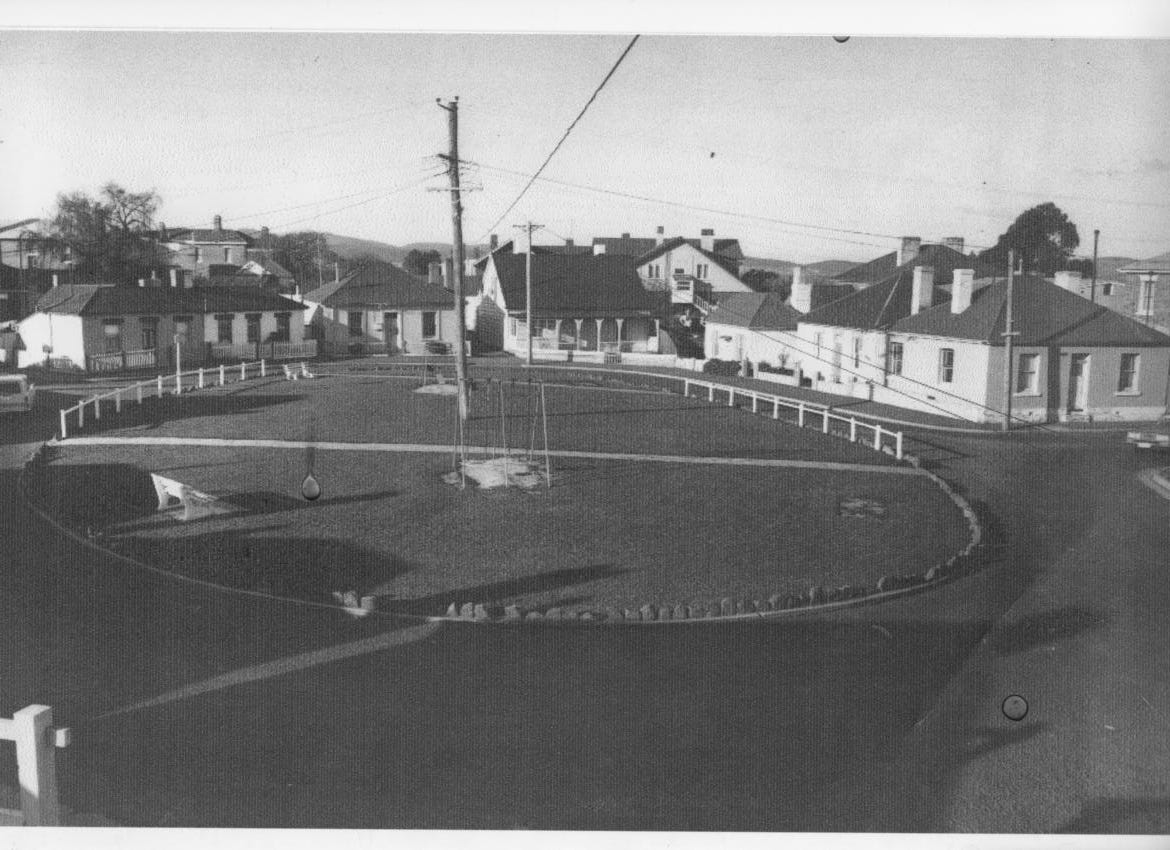
Patricia’s childhood home was built around 1803, when convicts
laid the first foundations in Tasmania.
It is part of Arthur Circus, the ring of historic cottages encircling
a park in the heart of Battery Point, the former fishing village that
is today one of Hobart’s most prestigious addresses. Since it was
one of the larger houses in the Circus, Church of England Sunday
School was held on its veranda for the local children every week.
With two bedrooms upstairs, and three on the bottom, the house
was a tight squeeze for twelve children and their parents, but the
family made do.
It was a time when life and death were housemates, and the
sight of coffins being carried to and from the cottages in the Circus
became a familiar sight to the neighbourhood kids. ‘Loved ones
should always be brought home to be properly farewelled,’ was
the lesson that burrowed into Patricia, the third youngest, whose
mop of unruly curls made her stand out from her sleek-haired
siblings. There was something else Patricia learned as a toddler:
when a spirit approaches, it makes a sound like the crackling of
autumn leaves.
‘In the house as I was growing up, I used to see spirits, a lot
of different sorts – some that were outlines and some that were
“sparkly” – and when they come towards you, they sound like a
rustling of leaves,’ says Patricia, fifty-six, who was three when she
saw her first ghost, a ‘white one’ floating down the stairs.
‘I’ve seen very tall spirits in white, like an outline, and spirits
in my bedroom that look human, but are doll-like; they have no
expression, and the room was always hot when they appeared.
The whole family used to see them, they just used to pass you in
the hallway.’
‘Was anyone in the house frightened by this?’ I venture.
‘Oh, some of the children used to scream at night when ‘they’
made a loud entrance. Sometimes, the door would fly open; there
was a crackling sound like a fire lighting up, then a rustling of
leaves as though they were coming into the room. So some of them
used to get scared, but as we got older, we tried to ignore it. We
knew it was there and coming, but we wouldn’t turn and look.’
Voices from the past also echoed in the halls. ‘We’d hear the
“Heave-ho!” of men in row boats, laughter, music . . . you had to
learn how to sleep in that house.’ Patricia’s elder sister remembers
it well: ‘The convicts! We could hear them rowing and laughing,’
says Margaret Kobylinski, sixty-two. ‘It was very hard. I was
shrewder than the rest of them. I knew there were things around,
but I was on my guard.’ Margaret stuns me with a detail that
speaks volumes about the haunting’s effect on their father, Ben:
in the mid-fifties, not long after little Trisha saw her white spirit
descending, he dismantled the stairway, forcing the family to cram
into the ground floor. ‘Entities would come down the stairs, and to
stop that, Dad just thought he’d take them out,’ recalls Margaret.
‘They were beautiful stairs, but that’s the only way he could handle
it. Problem is, that didn’t stop them.’
The strange happenings only intensified after a shattering event:
‘When I was about nine, my mum left,’ reports Patricia, who never
saw her mother, Doris, in the flesh again. ‘She just left the house.’
Patricia can only speculate as to why her mother would abandon
her husband and twelve children, ten still living at home, the
youngest only seven. ‘I think the children were just too much,’ she
says quietly. ‘We never had hot water, we could only have a bath
once a week, we never had a stove or fridge. If we had fresh milk,
we had to keep it in cold water. Our cooking was done on the
fireplace, so it was pretty basic.’
For Ben, life became a struggle. ‘It was very sad. We couldn’t
talk to our dad about certain things. There were eight girls, we
weren’t allowed to sit on his lap anymore, he put some distance
between us, but he was very loving,’ says Patricia, who was in and
out of hospital with rheumatic fever, causing her to miss much of
her primary schooling. ‘That was probably why I never learned to
read and write,’ says the articulate, gently spoken grandmother.
Masking his devastation, the fisherman remained a steady,
reassuring presence, tending his vegetable plot or polishing ten
pairs of shoes by the hearth in the chill of the morning. He could
not have known that another ghostly voice would soon be joining
his household, and this time, it would belong to one of his own.
When Patricia was thirteen, her brother Jimmy, sixteen, was
involved in an horrific car accident. Jimmy decided to join his sister
Lyn and her boyfriend, who’d offered to pick up a young couple
and their three-week old baby from hospital. The car slid in the rain
and, in the days before mandatory seatbelts, the baby was thrown
from the car and killed. Jimmy suffered terrible head injuries.
For three months, Jimmy lay in a coma, and yet the sounds of
his wailing pummelled the cottage’s whaling-board walls. As if
that’s not astonishing enough, Patricia says Jimmy wasn’t alone: a
baby’s high-pitched cry accompanied him. ‘We had the baby and
my brother in that house,’ she states. ‘We’d hear them crying. We’d
hear him yelling – it was very loud.
‘Very loud! Loud enough for anyone to jump up and take
off,’ seconds Margaret, who believes her father and siblings were
all psychic, which created a kind of energy trap in the house.
‘The young ones suffered badly . . .’ Then, when the boy died on
November fourth, 1965, it was utter bedlam. His phantom voice
would shriek, pleading for his sister Lyn, who’d survived the crash.
Bright random flashes lit up the house, and music seemed to ‘come
from nowhere’, says Patricia. The walls played his favourite song,
‘Donna’, the 1958 ballad. ‘We’d all just stop and look at each
other. And run.’
It reached the point where the siblings refused to be in the
house after their father left for work. Instead, they’d line up on the
path outside and wait for his return. They even stopped going to
school. ‘We were losing sleep,’ says Patricia. Jimmy’s pitiful cries of
‘Where are you, I can’t find you . . .’ kept the clan awake at night
and made them a jittery mess in the daylight hours. Finally, a group
of neighbours reached out to the splintered family. ‘They decided
to come in and do the housework,’ recalls Patricia, a tiny smile
turning her lips. ‘As he started to scream, those ladies were the first
to leave. We turned around and they were gone. We ran out after
them but they swore they’d never go back into that house.’
Ben didn’t ever deny that his son was haunting the place, he’d
seen and heard too much, but the stress consumed him. ‘It was
worrying the hell out of him; Dad went white overnight,’ remembers
Margaret. ‘Completely white.’ He sought the help of a psychiatrist,
who listened to each child’s account individually, ‘to make sure we
weren’t making anything up,’ says Patricia. His verdict? ‘He called
us all in together and told my dad that my brother was actually
trapped and all he needed to know was that Lyn was okay.’ They
were instructed to head home and calm Jimmy in their thoughts.
‘We had to tell him that Lyn was okay, she was with us and it was
okay for him to go. And he did.’
The house wiped its tears. Jimmy hushed.
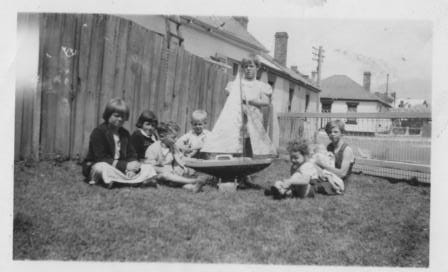
A photo arrives of Patricia with eight of her brothers and
sisters on the lawn outside their house. I easily spot my subject,
aged around three, for her springy curls. She’s exploring her shoe.
Jimmy is at the rear: the sun spotlights his white-blonde hair and
he wears the littlest of grins for the camera. The elder kids stare
out of their eyes with ancient souls.
The grainy black-and-white snapshot enchants me. It reminds
me of my own ancestors’ big clans; my maternal grandmother – mi
abuela – was one of nine, my grandfather, one of twelve, until time
felled them, one by one. Over and over, I dig out Patricia’s photo
from underneath piles of interviews and clippings, just to pore over
the children’s expressions. Patricia also sends me ‘then’ and ‘now’
views of Arthur Circus, and I think of the tourists who stroll the
postcard-pretty area today, ignorant of the layers of life and death
each charming façade conceals. Especially one.
Though somewhat hypnotised by the pictures of Arthur Circus
– its circular green is like a whirlpool I’ve fallen into – Patricia
eventually left it behind, so I’m obliged to follow. As she told me
when we first spoke, early in 2008, ‘We grew up with ghosts, but
that’s not the story I want to tell you . . .’ In 1974, she had her
first child, Amy, with a volatile man who would belittle her for her
illiteracy, so that when she met gentle, caring Wayne Turnbull, she
was keen to start a new life with him. They moved to Queensland
in 1980, and had their boys, Brett and Sam.
Wayne worked in the mines so the family moved around the
country. Patricia was content tending to their quiet lives, setting
up house where the work led them. The spirit world slept, her
memories of growing up alongside ghosts faded. That is, until 1998,
when Patricia realised for the first time that she would be warned
when a loved one was about to die.
The first time it happened, she was sitting at the family’s home in
Darwin, watching television, when a large black shadow stalked in
front of the set, the Venetian blinds rippling in its wake. ‘I thought,
“What the hell was that?” but I felt it was a warning so I marked it
on the calendar and started ringing around, telling family members.’
Then she forgot about it, until six weeks later, when a phone call
brought the news that her eldest brother had died. ‘He had fallen
down the stairs and his ribs went through his heart,’ she says. ‘His
name was Robbie.’
Sam inherited his mother’s uncanny foresight. Not long after
the sixteen-year-old casually mentioned ‘a man standing behind’
his mother, Patricia heard that her father, Ben, lay critically ill. She
rushed home to Tasmania, to her Apple Isle house of the spirits,
to say her farewells.
In the early hours of the morning, just before he passed, he
came to Patricia as an explosion of light, ‘like somebody putting
a flashlight in my face,’ she reports. Simultaneously, the television
sprang to life. It was an old-fashioned set, where you had to pull
a button to turn it on. That sent one of Patricia’s sisters quaking
to her doorway, but Patricia felt the opposite of fear. ‘I felt so
overwhelmed with love, that I felt like laughing,’ she says. ‘He’d
never told me he loved me, but I think he came and gave me all
the love he could in that flash.’
It had been six weeks since Sam’s vision.
The next time it happened would sear Patricia with fright. In
2003, she and Wayne were living in Parkes, New South Wales. They
lasted two days in the rented house before Patricia experienced the
most terrifying event of her life. Sleeping alone in bed – Wayne was
on night shift – Patricia’s eyelids flicked open. ‘There was this thing
hovering a couple of inches above my face. It was like a big, black
mass, it had streamers or ribbons floating, it was all uneven . . .
‘All I could think of was that I wasn’t meant to look at it, I
should run. I ran to the lounge room and wouldn’t go back into the
bedroom.’ Without hesitation, the pair moved out. Patricia didn’t
think to mark it on her calendar.
‘A phone call came six weeks later,’ she sighs. ‘It was my sister;
she was crying. My youngest brother, Peter, was dead.’
My mind summons again the blanched family picture, where one of the big children
cradles an infant like a doll in her arms. ‘He was the baby of the
family,’ says Patricia, as if reading my thoughts.
To her dismay, in 2004, her own baby, Sam, accepted a post
working with explosives in mines in the New South Wales city of
Armidale. Patricia didn’t want him to go and told him so. Every
part of her lurched against the idea, but it was a good opportunity
and Sam’s mind was made up. In bed one night in the days before
his departure, Patricia heard a calming male voice say, ‘The Lord
Giveth, the Lord Taketh. You are strong enough.’ Instead of being
afraid, Patricia was lulled to sleep by the soothing tones. ‘Then, on
our last meal together before he moved to Armidale, Wayne and
Sam were having a joke that they were going to cook tea tonight,’
she tells, lost in the sweet memory. ‘They were making veggies and
patties and having a really wonderful time together.’
‘Every time I tried to go into the kitchen, they’d shoo me out.
I found myself standing outside in the garden, watching them.
I thought, Is this what it feels like on the other side? Looking
through a window at us? Her musings sparked a memory of the
voice. She wondered if it was a warning of her own impending
death. The message had deemed her ‘strong enough’ and now,
standing at the glass, she thought, I’ll be okay. I’ll be able to come
back and look at my boys.’
The dinner the boys served up would be their last
family meal together.
Not long after Sam left, something began to stir in and around
Patricia. She was packing up the Parkes house to move again;
Wayne, who’d been feeling unwell, was heartened at the prospect
of managing a mine in Tasmania. It should have been a sunny time
in their lives, but the atmosphere around them seemed to crackle
and spit, suggesting otherwise. ‘Things in the house started to play
up of a night: the video would turn on, the lights would flicker, the
music would be playing – like violin or piano,’ says Patricia. ‘It was
like somebody or something was trying to get my attention. I was
jumping out of bed to turn the power off, the video was screaming,
its insides were going but there was no tape inside it. I couldn’t
work out what was happening.’
Could it have been a warning? The spirits’ brusque way of
announcing that her world was somersaulting – that the careful
life she’d built around ‘her boys’ was spinning out of control? As if
to prove her suspicions correct, Wayne was diagnosed with bowel
cancer and given only three months to live; their hopes dashed,
the couple moved back to Western Australia to be closer to their
daughter, Amy. ‘He had to give up his dream job,’ she whispers.
‘When the surgeon told him, I couldn’t see. He was a blur in front
of me because the tears would drop.’
Amid the shock of Wayne’s prognosis, the couple couldn’t shake
a nagging worry for their youngest son, who’d lost his licence in
Armidale for drink driving. ‘Sam was always telling us he was going
to die on the bike,’ recalls his mum. ‘When Wayne recovered from
his operation, we decided to fly over and drive back, bringing Sam
and his motorcycle with us.’
They booked a flight to Armidale on Monday, the thirteenth
of December, 2004.
‘On the 10th of December, Sam called us up and said he was
just letting us know he was going to be killed. He said, “I am
definitely going to be killed on the bike.” ’ His parents begged him
to keep away from it, repeating that they’d be there on Monday.
He had only to wait out the weekend. ‘But he just kept insisting it
was going to happen.’
The twenty-four-year-old was killed the next day. He’d been
doubling friends on his bike around the block when he veered
off course and slammed into a picket fence. His passenger was
only mildly injured. When Patricia spied the two police officers
approaching her door, a wave of ice and heat engulfed her. Her
handsome boy, with his dancing hazel eyes and blonde curls, was
gone.
From somewhere within her well of grief, Patricia found determination.
After flying his body home to Perth, to lay at a funeral
home in suburban Northbridge, Patricia felt her son was too far
away. She asked Wayne and her eldest son, Brett, to do something
she hadn’t seen since her days at Arthur Circus: ‘I said, “You’ll
have to go and get Sam from the undertaker’s. Sam is coming home
for Christmas.” ’ The men put Sam’s coffin in the back of the ute,
and with dead rapper Tupac Shakur blasting from the stereo, they
brought their boy home, where Patricia waited with open arms. ‘I
put a bed beside Sam and I slept there the first night. Wayne got
the courage to come in for the last two nights. I used to comb his
hair and talk to him.’
For four days and three nights, the mother kept vigil by her son’s
body. Her family left her to her mourning, occasionally setting a
cup of coffee beside her. Even though Sam had been embalmed,
his body began to discolour and an odour permeated the
room, but Patricia didn’t mind. ‘Doing that showed how much I
loved him,’ she says. ‘I never got to say goodbye to Jimmy, or to
Peter, so I think I knew what I had to do. It was heartbreaking
when they took him away.’

Eight months later, Wayne, with a secondary cancer on his liver,
was drawing his last, ragged breaths. As she sat by her husband’s
bedside, he suddenly became lucid. ‘He grabbed my arm and said,
“Trisha, I want to tell you I love you.” I started to cry. I looked at
him and said, “Please don’t leave me.” He said, “Trisha, you don’t
realise how strong you are. Remember, I’ll always be with you.” ’
The gentle miner with the lopsided grin died shortly after. He
was fifty-one. Patricia’s premonition at the kitchen window had
come true: she was now an outsider to her boys’ world – because
her veins still throbbed with life.
As she did with Sam, Patricia laid out Wayne at home. In the
whirlwind of those fractured days, she had a visitor from her past.
‘One night, I was just laying with the light on in the bedroom. I
had the feeling someone was standing behind me in a coat, hat,
handbag, old shoes that laced up with heels, and old-fashioned
stockings. I could see what she was wearing.’
Who is that? she wondered.
‘The next night, I was asleep, and I woke up and I saw the same
lady, but she was younger, in a spotted dress, combing her hair.’ On
the third night, the woman appeared ‘. . . sitting in a hospital chair.
There were tanks beside her and she was trying to breathe. She had
a mask over her. Somewhere in there, I realised it was my mother.
I remember yelling out, “Mum! My God that’s my mum!” ’
Patricia believes that she was clairvoyantly shown select scenes
from her absent mother’s life, from her youth to her lonely death
in hospital. I wonder, in her final days, did her mother reach out
in her dreams to kiss a dozen forgotten cheeks?
Soon after she saw the final vision of her mother, Patricia woke
to the sight of a young soldier squinting down at her, a bullet hole
where his eye belonged. ‘He wore an old uniform in heavy khaki
with silver buttons, real old boots and a big hat. He was very
young.’ The boy digger was there, and then he wasn’t, leaving
Patricia to ponder if the trauma of losing her adored husband and
son had somehow resurrected her ability to see dead people?
‘I don’t know how to explain it,’ she says, shrugging. ‘It’s like,
“Oh, who are you?” and then all of a sudden, they just disappear.
I think I’m just trying to develop what I’ve got, but I’ve got no
idea what I’m doing.’
Which is why, when she returned to Battery Point, to the old
house by the sea in Arthur Circus, she thought she would try to
help the spirit of the paralysed man who squirmed towards her
one night. She hopes it worked because he vanished. She hopes he’s
where he’s supposed to be.
Today, Patricia is back in Western Australia. She has sold the
home where she mourned her ‘boys’ and is living in a new house
she had built forty-five minutes from her children Amy and Brett.
‘I just know all these spirits are encouraging me to go forward,’
she says. ‘I’ve lost my two loved ones, but I’ve still got two children
and my grandchildren. I’m going to a quiet life.’
In a new house, by the bush.
I just spent a very enjoyable time reading this story. I devoured your books back in the day. I had forgotten how good they are.
You tell the best ghost stories, which are all the better for being personal accounts. Can’t wait to read more - thank you ☺️
Beautiful and so very familiar in so many ways. It's amazing what the human 'spirit' can endure - for love. 🕸️💞🪶